What should a sewer repair estimate include?
Compare what the inspection found, which pipe section the work covers and how the ground will be left before comparing prices.
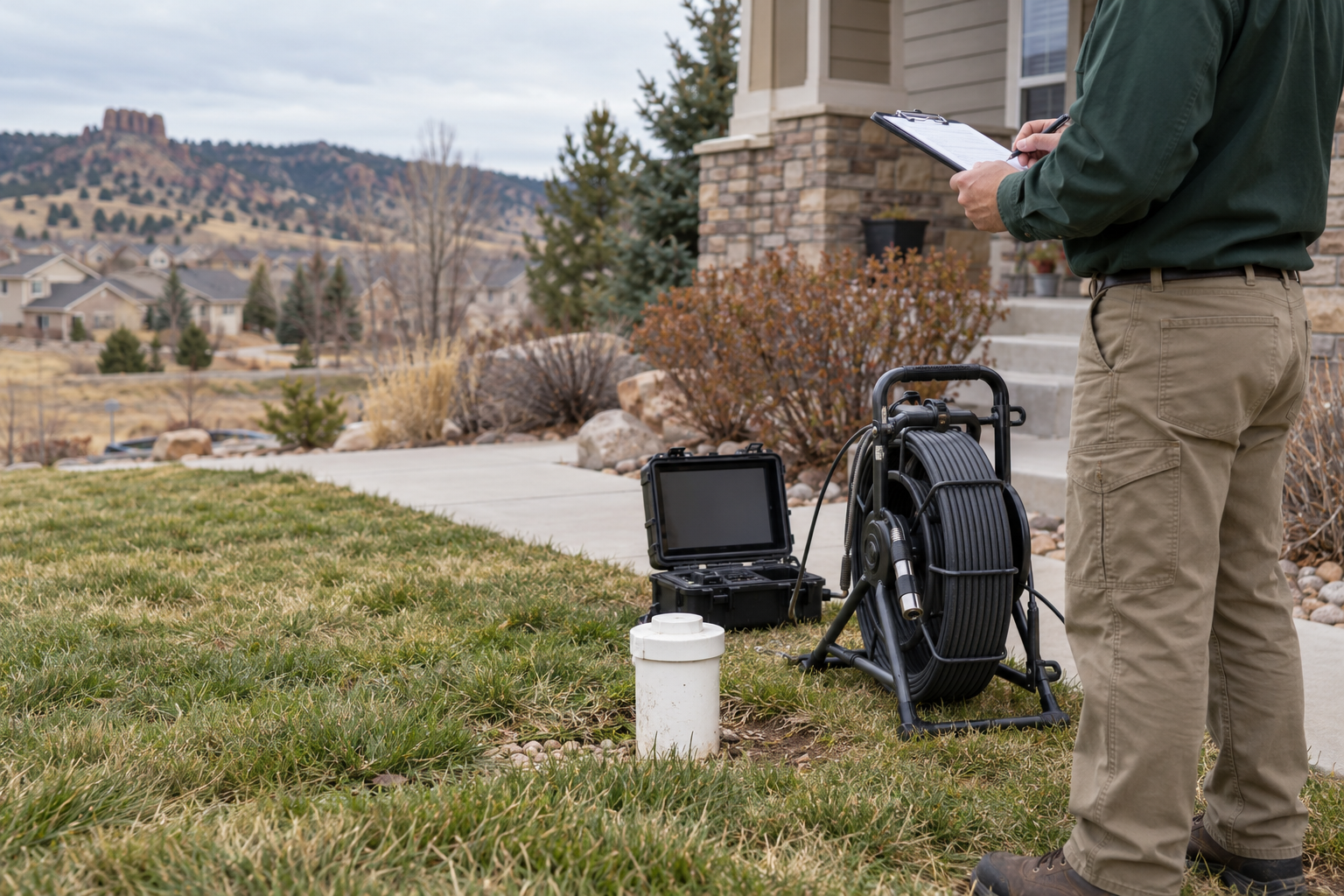
The illustration above is AI-generated; it is not a photo of a Humble Services job.
A sewer repair estimate should explain what was found, where the repair or replacement starts and ends, how the crew will reach the pipe and how the ground will be left afterward. It should list what the price includes, any uncertainties and how extra work will be approved.
For a homeowner in Castle Rock or Parker, two estimates labeled “sewer repair” can describe very different jobs. One may cover a short failed section and basic backfill. Another may include a longer replacement, a new access point and finished surface restoration. Neither description tells you enough until the boundaries are written down.
Ask what the inspection found
Have the contractor show you what supports the recommendation. A camera inspection can identify visible problems inside the line and help explain why cleaning, a limited repair or a longer replacement is being proposed. The estimate should connect the observed problem to the work being sold, rather than simply say the pipe is old.
Useful questions are:
- Where was the camera inserted?
- How far did it travel?
- Where is the damaged section?
- Was the rest of the route visible?
Request the recording or clear images, along with an explanation you can understand. If standing water, debris or a blockage prevented a complete view, the proposal should state that limitation and what is needed to finish the assessment.
When arranging a sewer line repair assessment, ask which camera findings support the proposed scope at your house.
Write down where the repair starts and ends
“Replace sewer line” is too vague to compare. Ask where the new pipe will begin and end, which connections are included and which existing sections will remain. Have the contractor identify these locations and list the expected length and depth, where known.
If a short repair is proposed, ask what is known about the pipe on either side. If a longer replacement is proposed, ask which findings make the added work reasonable. A damaged section does not, by itself, describe the condition of every other section. Equally, replacing one failure will leave any separate defects outside the agreed repair in place.
You do not need to diagnose the pipe yourself. Ask what the estimate covers and what the contractor has verified.
Separate clearing a blockage from repairing the pipe
Cleaning and structural repair are different scopes. Clearing material from the line may restore flow and make a further inspection possible. It does not replace a broken section or change the alignment of the existing pipe.
If cleaning is part of the proposal, ask whether it is a separate diagnostic step, part of the repair price or an alternative being offered after inspection. Humble Services also offers hydro jetting; suitability should be assessed for the actual line and its condition. A recommendation should explain what the cleaning is intended to accomplish and how the result will be checked.
Define access and excavation
The work above the pipe matters as much as the pipe itself when you are comparing disruption. Ask where access is expected to be needed: an open yard, a paved drive, a walkway or another location. Have the contractor explain the anticipated excavation footprint and any access needed for equipment, materials and removed soil.
Discuss gates, fencing, irrigation, nearby utilities and surfaces that may be disturbed. Establish who arranges utility locating and any necessary permit, inspection or right-of-way coordination. These questions depend on the address and the proposed work; a general promise to “handle everything” is less useful than naming the responsibilities and included charges.
If the route or depth is uncertain, ask the contractor to state the assumptions in the estimate. Agree on how changes will be handled before digging begins, including what happens if the work reveals a different route, an inaccessible connection or additional damage.
Read the restoration description carefully
“Backfill included” and “restore the yard” may mean different things. Ask for the finish you can expect in each disturbed area. Soil placement and grading, lawn repair, resetting paving, and concrete or asphalt work should have clear inclusion or exclusion statements wherever they apply.
For a hard surface, discuss the size of the planned patch and whether the proposal promises a match or simply a functional repair. For landscaping, ask which planting or irrigation work is included and which remains your responsibility. Ask how later settlement will be addressed and whether any follow-up work is part of the agreement. Do not assume an unspecified restoration promise covers every item.
For work in a yard or hard surface, have the contractor describe the restoration for your property in the written estimate. A side yard and a driveway involve different finishes.
Have the finished work checked and documented
Before approving the work, ask how the crew will check the repair and what records you will receive. That may include a view of the completed section, a flow check, any applicable inspection record, or photographs of work that will be covered. The proposal should say which checks are included.
Also ask which part of the line those checks cover. Checks on the new section do not automatically tell you the condition of the pipe left in place. Keep the final scope, any approved changes and the completion records together so you have a clear record of what was done.
Compare the same scope before choosing a price
When two totals differ, set the proposals side by side and check these items:
- The diagnosis and any inspection limitations.
- The repair endpoints, retained pipe and included connections.
- Cleaning, access, excavation and material removal.
- Permit or inspection coordination and any separate charges.
- The restoration finish and completion checks.
- Exclusions, payment terms and the approval process for changes.
A lower total may be appropriate for a smaller, well-supported scope. A higher total may include work you actually need. Have each contractor clarify missing items in writing so you can decide based on equivalent work. If a warranty is offered, read the actual terms, covered work and exclusions rather than assuming the word means the same thing in every proposal.
Plan the household disruption
Ask when bathroom, laundry or kitchen use may need to stop, how the crew will communicate that restriction, and what would happen if the work takes longer than anticipated. Discuss equipment access and how the work area will be managed while the repair is open. These are planning questions, not reasons to accept a guaranteed duration that has not been assessed for your site.
For a sewer repair assessment in Castle Rock or Parker, call Humble Services at 720-469-6864. Explain the symptoms, any previous clearing attempts and what you already know about the line. Ask for the findings and a written scope that makes the repair, access and restoration understandable before you decide.
Tell us what is happening.
Call Humble Services or email your address and a description of the problem or project.
- Phone
- 720-469-6864
- HumbleServices@pm.me
- Areas
- Castle Rock & Parker, Colorado
- Hours
- Monday to Friday, 7:00 a.m. to 5:00 p.m.