Signs a pump is on the way out
- Running constantly, or cycling on and off every few seconds
- Grinding or rattling rather than a steady hum
- Visible rust or corrosion on the body
- It does not start when you pour water into the pit
- Over about seven to ten years old
What we replace
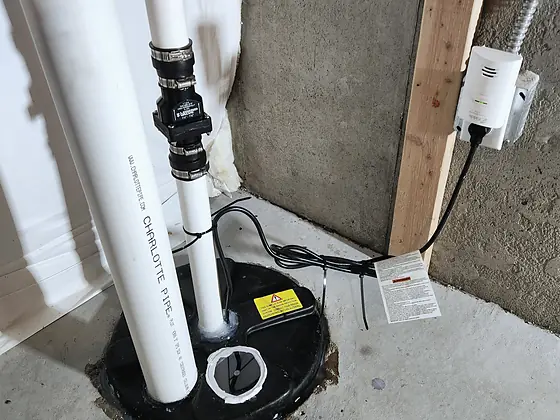
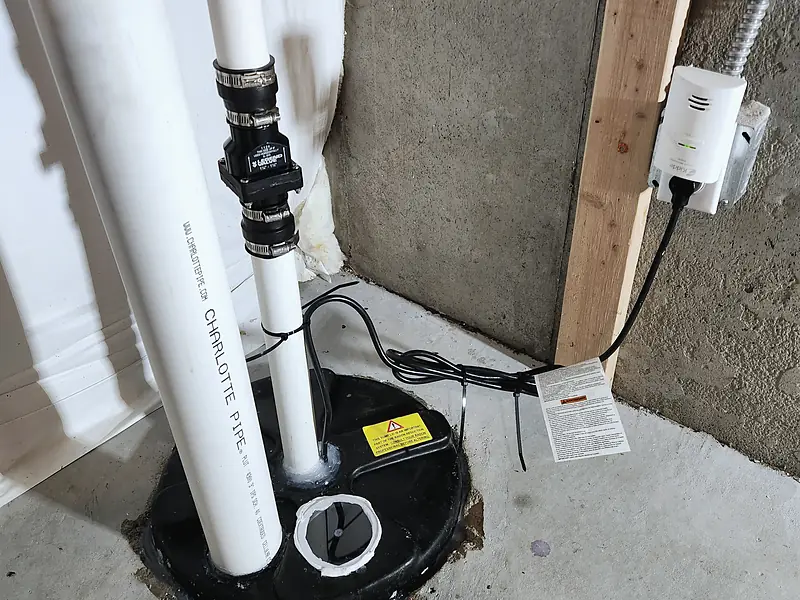
We check the pump, the upright discharge pipe (riser) and the check valve together so the replacement covers any worn parts. A sealed basin lid keeps the pit closed. An alarm can alert you if the water level rises in the basin.
Test it before you need it
Pour a bucket of water into the pit and watch. The pump should start, clear the pit and stop. If it does not, or it strains, call before the next storm rather than during it.
Backup pumps and alarms
A pump tends to fail when it is raining, which is also when the power goes out. A battery backup keeps a second pump running through an outage. An alarm on the basin tells you the water is higher than it should be before it is on the floor. We will say whether either is worth it for your basement. A finished basement changes the answer.
The basin, the lid and the check valve
A sealed lid contains odors and keeps objects out of the pit. A new check valve stops water in the discharge pipe from flowing back into the pit and making the pump run twice. We also check the outdoor discharge line, because a broken or frozen line keeps the system from draining properly.
What is included
- The existing pump, float and discharge tested
- A new pump sized to the pit
- A new riser and check valve
- A sealed basin lid
- An alarm or battery backup if you want one
- Tested with water before we leave
Completed sump installation